

Photo by Pixabay
As the year comes to a close, many buyers, homeowners, and investors take the final months to review their finances. Spain’s property tax system is one area you definitely want to understand before stepping into 2026.
Whether you already own property in Spain or you’re planning to buy soon, year-end is the perfect moment to get clear on the taxes that matter most, what deadlines are approaching, and how to prepare strategically.
Below, we break down the essential taxes you should know, in simple language and with practical examples. And if you want a full checklist to guide your planning, make sure to download our Q4 Property Investment Checklist. It covers everything you need to review before the year wraps up.
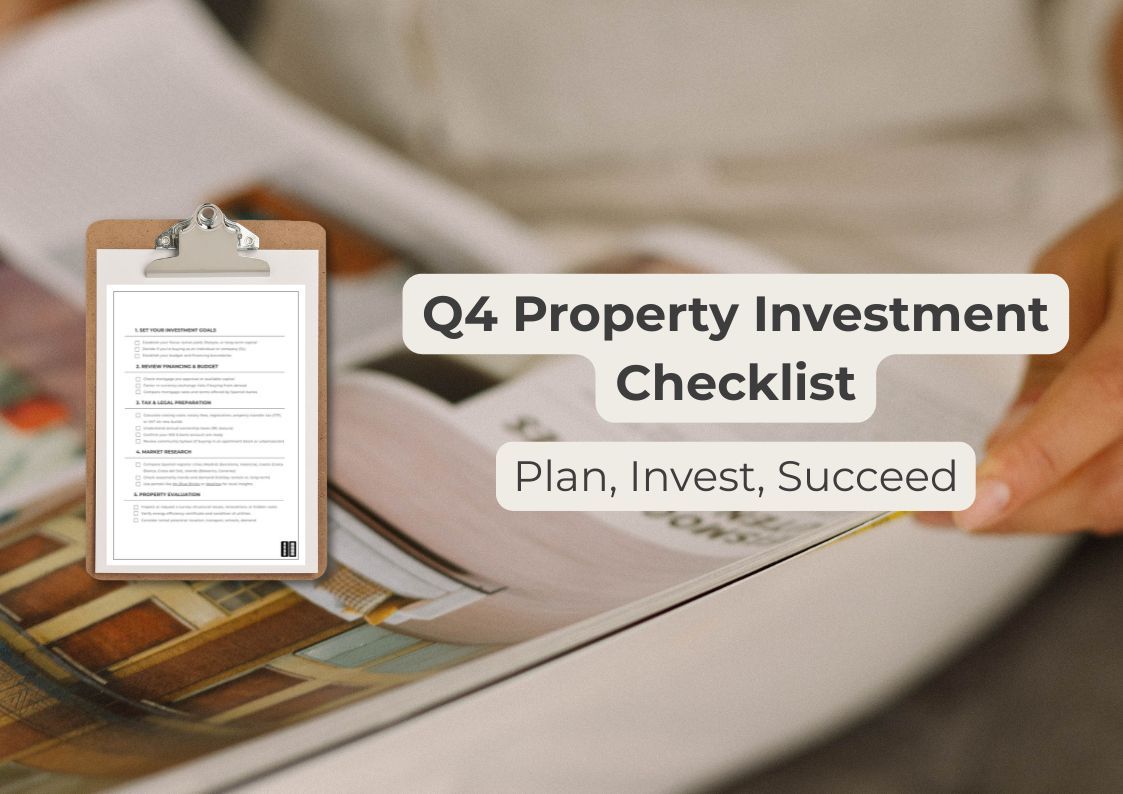
Photo by My Blue Bricks
1. IBI: The Annual Municipal Property Tax
What it is:
IBI (Impuesto sobre Bienes Inmuebles) is Spain’s annual property tax paid to your local town hall.
When it’s due:
Typically, between September and November, depending on the municipality.
Why it matters before year-end:
If you’re buying a property now, make sure:
- The seller shows proof that it has been paid for the current year.
- You know the exact amount for budgeting (varies by town).
Tip: IBI is deductible for certain rental structures, helping long-term rental investors.
2. Non-Resident Income Tax (IRNR)
If you own property in Spain but live abroad, you must file IRNR annually.
If the property is rented:
You pay tax on net rental income (24% for non-EU citizens, 19% for EU/EEA).
If the property is not rented:
You still pay a small tax based on the cadastral value.
Why it matters before year-end:
Make sure your rental records, expenses, and paperwork are ready for filing early next year.

Photo by Mikhail Nilov
3. Wealth Tax (and the Solidarity Tax)
Spain’s Wealth Tax varies by region, but some high-value property owners may need to file, especially in:
- Catalonia
- Valencia
- Andalusia (though reduced in recent years)
There is also the temporary Solidarity Tax for high-net-worth individuals, which could apply depending on your global assets.
Before year-end:
If your total assets in Spain approach the threshold (usually around €700,000 + after allowances), get an early assessment from your accountant.
4. Property Transfer Tax (ITP) or VAT (IVA)
If you’re buying property before the end of the year, you’ll pay either:
- ITP (6-10% depending on region) for resale properties.
- VAT + 1.5% Stamp Duty for new developments.
Year-end consideration:
Some regions revise their tax percentages on January 1st, so if you’re close to securing a deal, it may be financially beneficial to close before those updates.
5. Capital Gains Tax (CGT) if You Plan to Sell
If you’re selling a Spanish property, the profit is taxed at 19%-28%.
Year-end strategies:
- Offset gains with allowable renovation expenses.
- Explore reinvestment exemptions (e.g., reinvesting in a primary residence).
- Confirm whether selling in December vs January impacts your tax obligations.
If you’re planning to sell soon, getting this right can save thousands.

Photo by RDNE Stock project
6. The Plusvalía Municipal
This is a local tax on the increase in land value between the purchase and the sale.
Important changes allow sellers to choose between two calculation methods, helping reduce your tax if the market didn’t move in your favor.
Before selling, always request both calculations.
7. Rental Income Compliance
Whether you rent long-term or short-term (touristic license), make sure you’re aligned with:
- Local regulations
- Annual declarations
- Expense tracking
- Depreciation rules (in long-term rentals)
The end of the year is the perfect moment to gather invoices, rent receipts, and agent fees.
8. Planning Ahead with Our Q4 Property Investment Checklist
To simplify all of this, we created a free Q4 Property Investment Checklist, covering:
- Tax deadlines
- Budget planning
- Market trends to review
- Financing preparation
- Legal documents to update
- Evaluation steps if you’re planning to buy early next year
It’s designed to help both new and seasoned investors start the new year confident and prepared.
Final Thoughts
Spanish property taxes can feel overwhelming, but with the right planning and the right team, they become manageable, predictable, and even strategically useful.
Whether you’re preparing to buy your first property, expand your portfolio, or simply get your numbers right before December 31st, this is the perfect moment to review your situation and plan ahead.
If you’d like help understanding your specific tax scenario or navigating an upcoming purchase, the My Blue Bricks team is here to guide you every step of the way.
Discover My Blue Bricks Projects | Contact Us | Join Our Newsletter